Wants & Needs
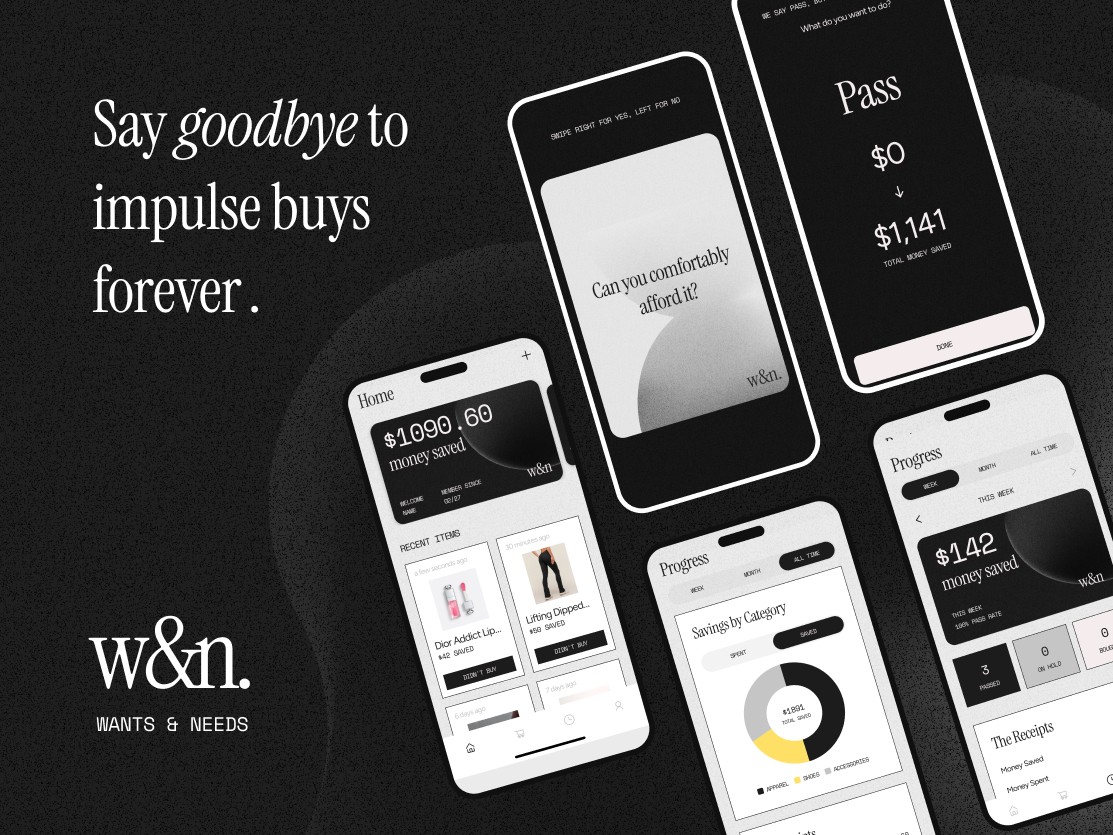
Overview
Wants & Needs is a mobile app designed to reduce post-purchase regret by inserting a structured pause before impulse purchases. Users complete a short decision flow and receive one of three outcomes: Buy, Hold, or Pass. Choosing Pass increases a visible “Money Saved” counter. The app is live on iOS and Android as an MVP.
Role
Problem definition, UX wireframing, decision logic design, MVP scoping, and roadmap direction. Partnered with an engineer who implemented the technical build and final UI execution.
Problem
Modern commerce is optimized for conversion. Social media platforms amplify targeted ads within emotionally charged environments, often during moments of boredom, stress, excitement, or insecurity. These triggers intersect with frictionless checkout systems, increasing the likelihood of reactive purchases.
For individuals prone to impulse behavior, the issue is not financial literacy. It is decision fatigue. Users may resist dozens of ads successfully, but under repeated exposure and cognitive load, eventually make purchases misaligned with long-term goals.
Existing budgeting tools operate post hoc. They track what has already happened. They do not intervene at the moment of cognitive vulnerability.
Impulse purchasing often leads to:
Post-purchase regret
Accumulated discretionary spending (often thousands annually)
Emotional guilt cycles
Reduced confidence in financial discipline
Wants & Needs was designed to intervene at the exact inflection point between desire and transaction.
Target User
Digitally native consumers (primarily 22–35) who:
Spend significant time on social media
Have discretionary income but struggle with impulse control
Experience recurring post-purchase regret
Do not want full budgeting systems
These users are not financially irresponsible — they are decision-fatigued.
Jobs to Be Done
Pause before overspending
Walk away confidently
Defer desire without loss
See visible progress when resisting temptation
This is a micro-decision tool, not a budgeting replacement.
Product Walkthrough
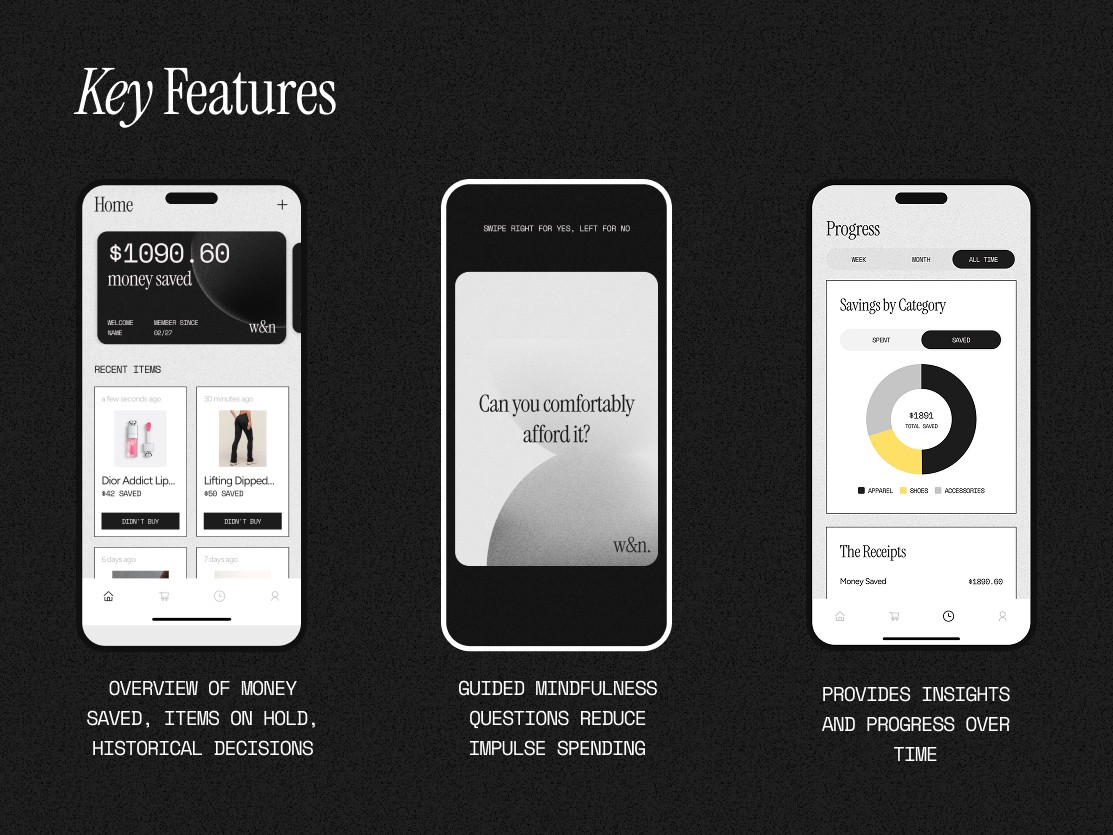
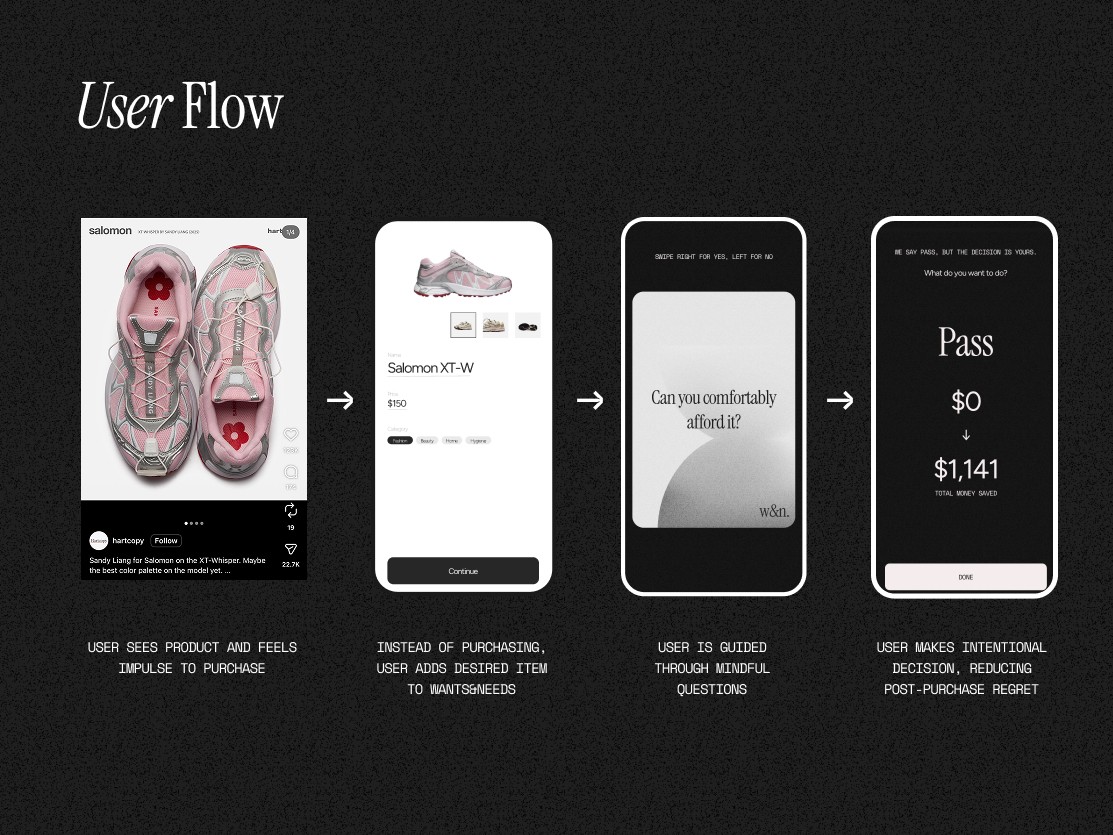
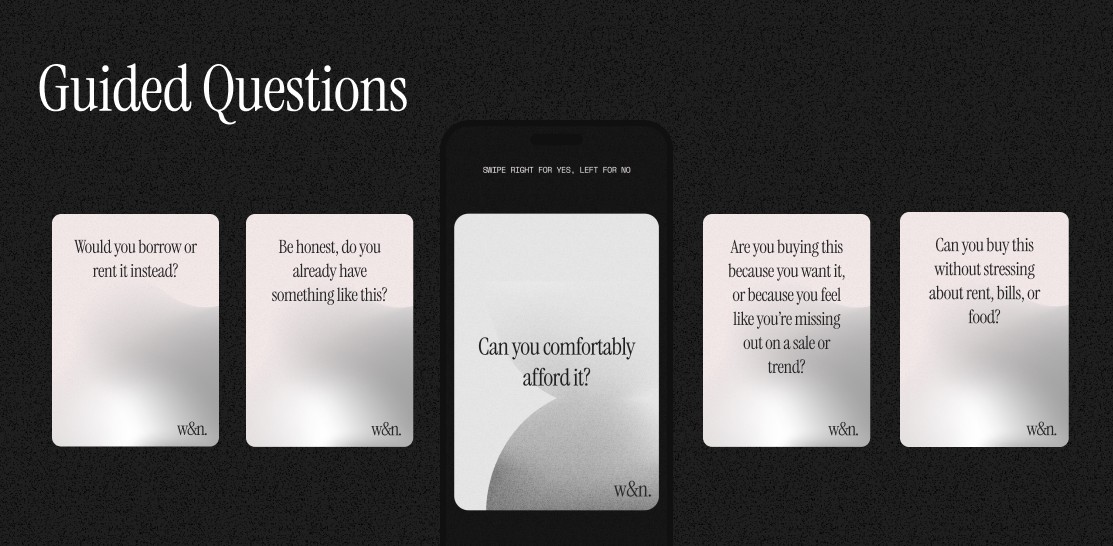
Product Decisions & Roadmap
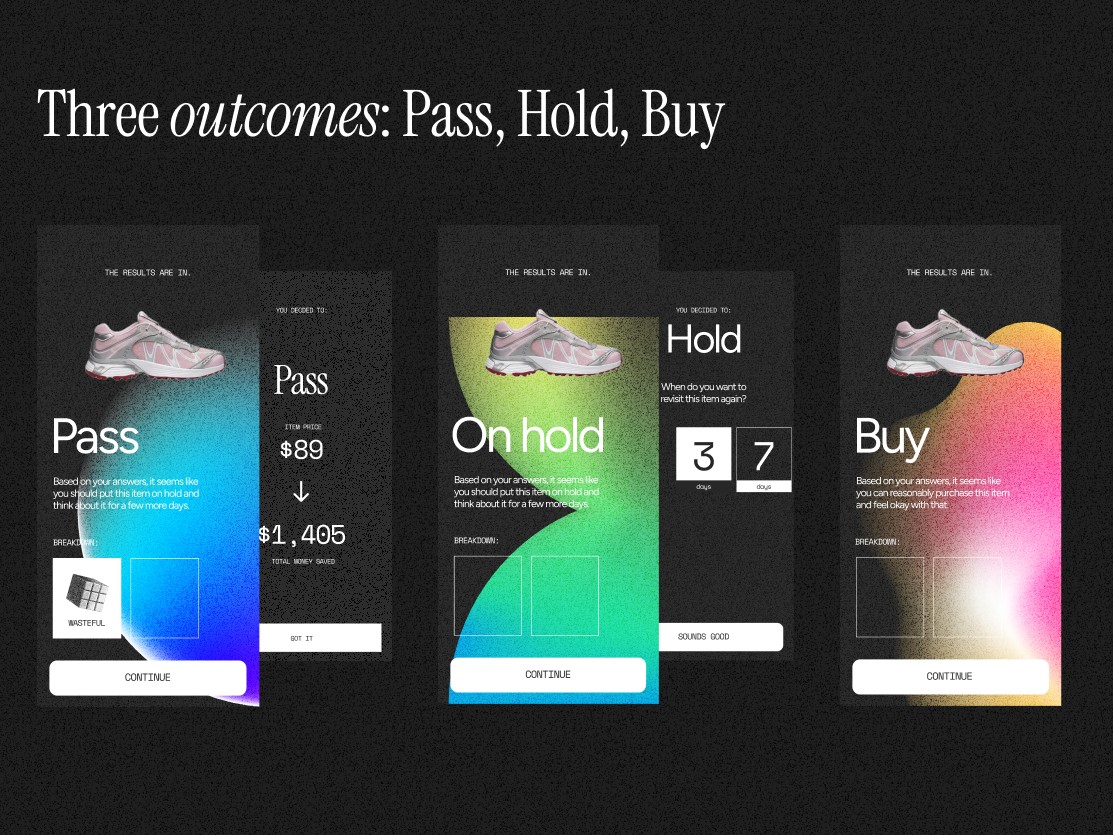
Guided Question Decision Matrix & Outcomes
The decision matrix was informed by regret pattern analysis and mindful spending frameworks. The goal is to interrupt emotional momentum within 1–2 minutes.
Three outcomes:
Pass – reinforced restraint
Hold – deferred decision to reduce loss aversion, preserves desire without urgency bias.
Buy – intentional affirmation
Monetization Philosophy
Monetization must align with user trust and show real outsized value for users looking to spend more mindfully. We currently run a freemium, subscription-based monetization model. With a free tier, users can log a limited number of products per month with not additional cost. We believe that our app can save users hundreds, if not thousands, of dollars per year and we intentionally show our value proposition through our onboarding process.
Future updated monetization models can include:
Deeper AI-driven behavioral insights
Optional cashback, referral integrations, and lowest possible price options for intentional “Buy” decisions
The product avoids models that incentivize increased spending.
MVP Tradeoffs
The hardest product decision was choosing not to overbuild.
We intentionally did not:
Add bank integrations
Over-polish micro-interactions
Add personalization layers
Instead, we validated the core loop: Structured pause → intentional decision → reinforcement.
Early Learnings
Although still early-stage, qualitative observations surfaced several insights:
“Hold” is often the preferred option. Users want to preserve desire without immediate loss.
The Money Saved counter creates disproportionate satisfaction relative to its simplicity.
Requiring users to remember to open the app is a major friction point.
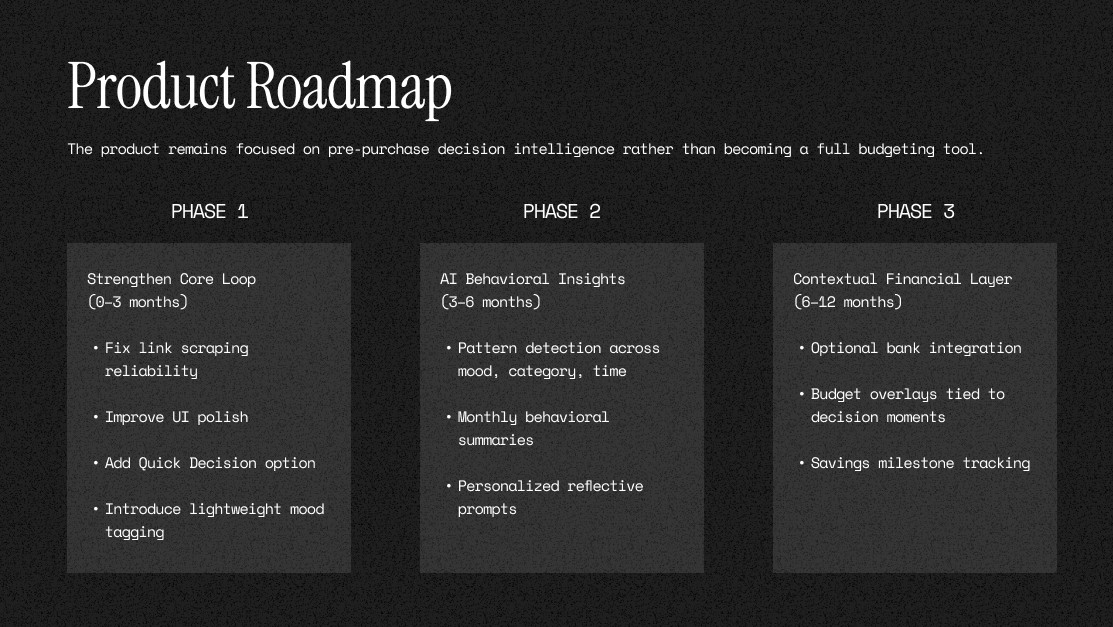
Repeated use of the full matrix can feel cognitively heavy, motivating the Quick Decision roadmap feature.
These insights directly informed the phased roadmap below.
Current Limitations
Reliance on user memory to open the app
Cognitive load from repeated full decision matrix
No personalization
No environmental intervention (e.g., checkout detection)